Breaking Down Data Silos with a Unified Data Layer

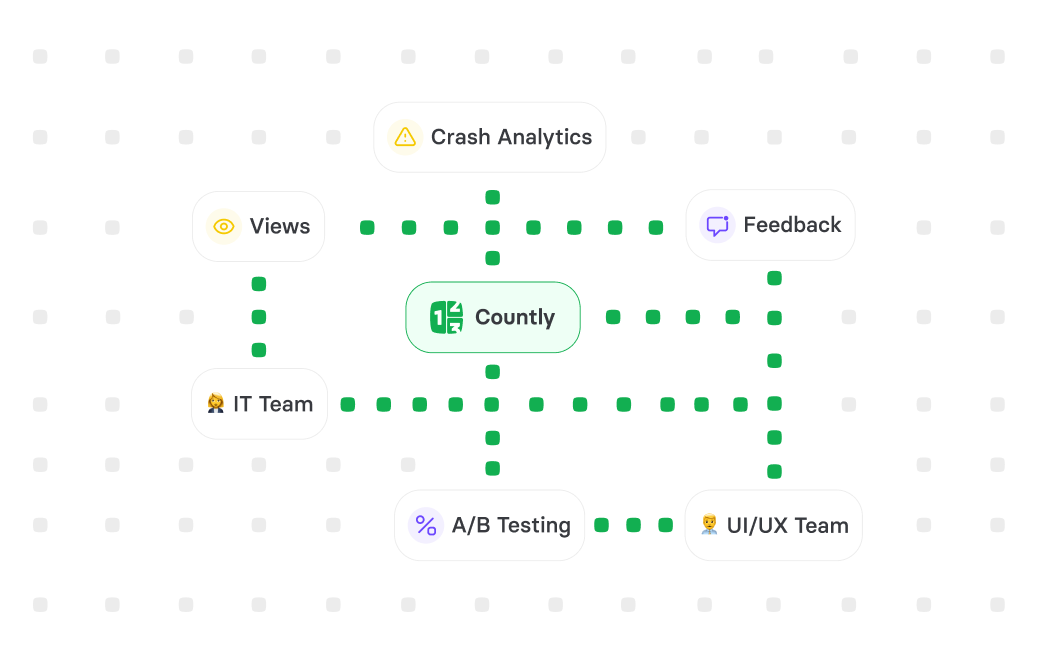
A data silo is a dataset held in a system that other parts of the organisation cannot readily access or reconcile. In product organisations the silos are rarely deliberate — they form because each team bought the tool that solved its own problem, and each tool holds its own version of the user.
A unified data layer is the architectural response: a single, governed representation of behavioural and profile data that every consuming system reads from, rather than each system maintaining its own.
How do analytics silos form?
Four mechanisms, none of which involve anyone making a bad decision.
Tool proliferation. Product uses one analytics platform, marketing another, support a third, and mobile has crash reporting nobody else looks at. Each is correct for its buyer and none reconcile.
Platform separation. Web analytics and mobile analytics implemented separately, with different identity models. The same person is two users, and cross-platform behaviour is unmeasurable.
Identity fragmentation. Anonymous IDs, logged-in IDs, CRM IDs, and support ticket IDs describing one person with no resolution between them. This is the silo that does the most damage because it is invisible — every individual system looks correct.
Organisational boundaries. Data held by a team that has no obligation to share it, and no mechanism to.
The cost is not the storage. It is that no single question about the customer can be answered without a reconciliation project.
What does a unified data layer actually mean?
Not one database. A unified data layer means:
One event schema. Events defined once, with the same names, properties, and semantics across web, mobile, desktop, backend, and connected devices.
One identity model. A defined resolution path from anonymous to known identity, applied consistently across every surface.
One collection path. Events flowing through a single governed pipeline rather than each tool collecting independently. This is the step that eliminates most reconciliation work, because reconciliation is mostly the consequence of parallel collection.
One governance regime. Retention, privacy classification, and access control defined once and enforced across the layer rather than configured per tool.
Consumers can remain plural. Marketing can keep its own tooling. What changes is that they read from a common, governed representation rather than each maintaining a partial one.
Silos vs unified layer
| Siloed | Unified data layer | |
|---|---|---|
| Event definitions | Per tool, divergent | Defined once, applied everywhere |
| Identity | Separate per system | Single resolution model |
| Cross-platform journeys | Not answerable without a project | Native |
| Adding a new consumer | New integration, new collection | Reads from the layer |
| Subject erasure | Executed per system, inconsistently | One operation |
| Privacy classification | Per tool, if at all | Once, enforced centrally |
| Reconciliation cost | Continuous | Largely eliminated |
The subject-erasure row is the one that turns this from an efficiency argument into a compliance argument. Under GDPR and comparable regimes, an erasure request has to reach every copy. In a siloed estate that means executing it across six systems and hoping. In a unified layer it is one operation with an audit trail.
How do you consolidate without stopping delivery?
Five steps.
1. Map the estate. Every system holding behavioural or profile data, what it holds, who consumes it, and which identity it keys on. The map is always larger than expected — support tooling and marketing platforms are the usual omissions.
2. Define the canonical schema. One event taxonomy and one identity model. This is a governance decision before it is a technical one, and it needs an owner with authority to settle disputes.
3. Pick the layer. Whichever system holds the most complete behavioural data and can serve the others. For product organisations this is usually the product analytics platform, because it already receives events from every client surface.
4. Migrate consumers one at a time. Repoint each consuming system to read from the layer. Run in parallel and reconcile before cutting over. Start with the lowest-stakes consumer.
5. Close the parallel collection paths. The step that gets deferred and shouldn't. Until the old collection path is off, you have a unified layer and a silo.
Step 2 is where consolidation projects stall, and the reason is usually organisational rather than technical: two teams have incompatible definitions of an active user and neither has the standing to overrule the other. Resolve that before writing code.
Frequently asked questions
What is a data silo? A dataset held in a system that other parts of the organisation cannot readily access or reconcile with their own. In analytics, silos usually form from tool proliferation and fragmented identity rather than from deliberate restriction.
What is a unified data layer? A single governed representation of behavioural and profile data — one event schema, one identity model, one collection path, one governance regime — that consuming systems read from instead of each maintaining a partial copy.
Is a data warehouse a unified data layer? It can be the storage for one, but a warehouse alone does not unify anything. Loading six systems' divergent schemas into one warehouse produces a centralised silo. Unification is a schema and identity problem, not a storage problem.
How do data silos affect GDPR compliance? They make subject rights hard to execute reliably. An erasure request must reach every copy of a person's data; in a fragmented estate that means several manual operations with no single audit trail, which is difficult to evidence to a regulator.
What is the first step to breaking down data silos? Map the estate — every system holding behavioural or profile data, its consumers, and its identity key. Consolidation attempted without the map consistently misses systems.
Where to go next
- Governance: Data Governance for Product Analytics
- Foundations: What Is First-Party Data?
Countly is a first-party product analytics and customer engagement platform that runs self-hosted, on-premises, or in a private cloud.

Posts that our readers love
to grow your product
is here.