On-Premise Data Collection Platforms Compared by Capability (2026)

TL;DR
Most on-premise data collection tools focus on a single method—analytics, web tracking, or surveys.
- Matomo covers web analytics
- LimeSurvey and SurveyJS handle surveys and forms
- If you have multiple types of data, you’ll typically need multiple tools—and that means fragmented data. Platforms like Countly take a different approach by combining analytics, feedback, and surveys in a single on-premise system, so data stays connected from the start.
Organizations that need full control over user data—whether for compliance, security, or internal policy—are increasingly turning to on-premise data collection platforms.
But once you start researching on-premise data collection tools, things get confusing quickly.
Some platforms focus on analytics. Others handle surveys or feedback. A few attempt to cover multiple use cases—but not always in a unified way.
That’s the core issue:
Most on-premise tools don’t actually solve “data collection” as a whole—they solve just one part of it.
This guide compares the leading platforms based on how they collect data, what types of data they support, and how complete their on-premise capabilities really are.
What “On-Premise Data Collection” Actually Means
At its simplest, on-premise (self-hosted) data collection means your data never leaves your infrastructure.In practice, that includes:
- storing all user data on your own servers
- avoiding third-party cloud processing
- maintaining full control over access, retention, and compliance
But “data collection” itself is broader than most definitions suggest.It typically spans three distinct layers:
- behavioral data (user actions, events, sessions)
- traffic data (web analytics, acquisition, page views)
- self-reported data (surveys, forms, feedback)
Most tools only cover one of these. That’s where the fragmentation begins.
Why Most On-Premise Data Collection Is Fragmented
If you look at the current landscape, the split becomes obvious. Tools like PostHog focus on product and event analytics. Platforms like Matomo are built for application tracking. Meanwhile, LimeSurvey and SurveyJS specialize in surveys and structured feedback. Each of these tools works well within its domain. The problem is what happens when you need more than one type of data—which is almost always the case.
Teams end up running multiple on-premise systems in parallel. Data lives in separate silos. User identities don’t always match. Even simple questions start requiring joins, exports, or manual stitching.
Ironically, you still “own” your data—but you don’t fully control how it connects.
The Shift Toward Unified On-Premise Platforms
This is where a different category has emerged: unified on-premise data collection platforms.
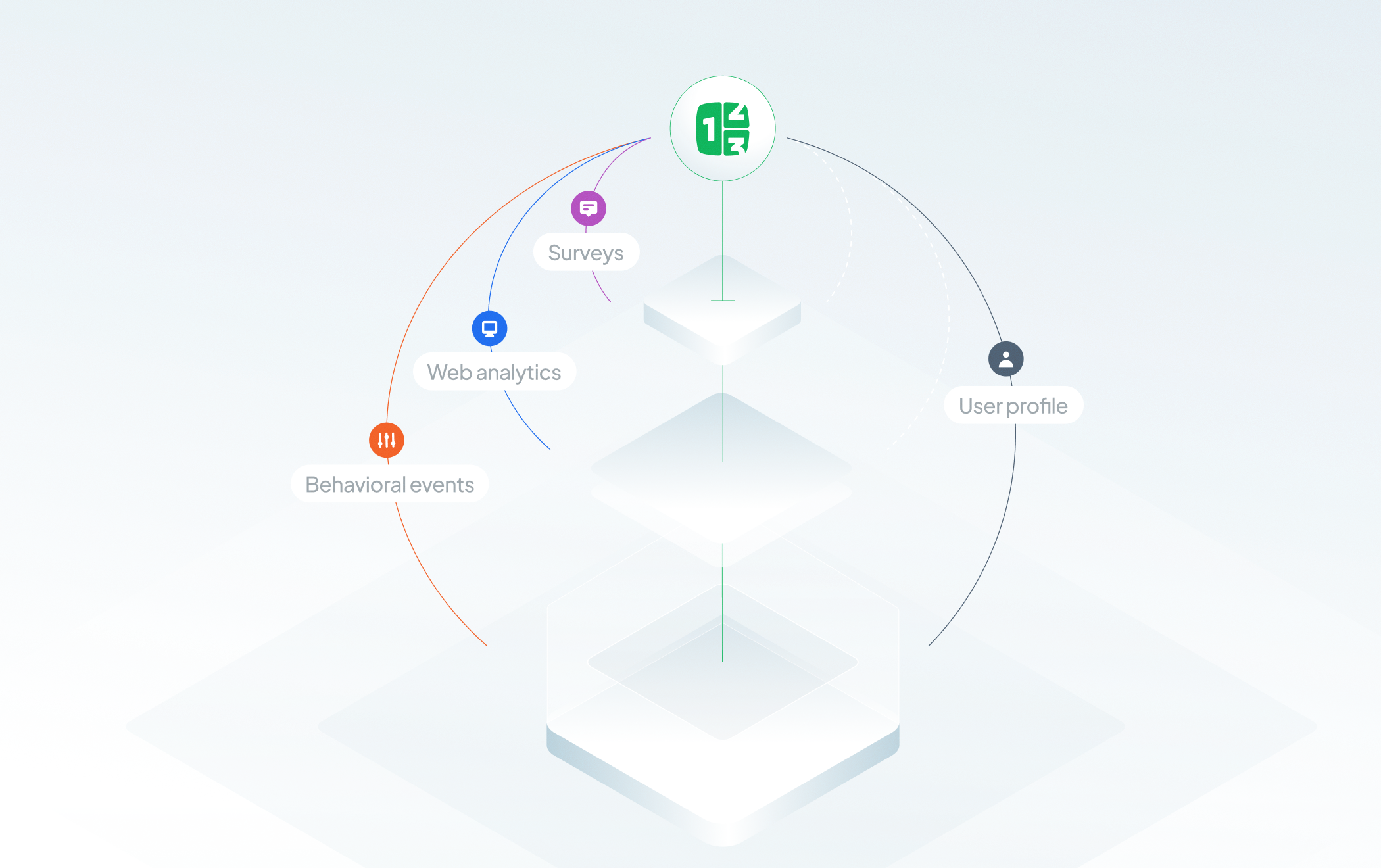
Instead of treating analytics, surveys, and feedback as separate tools, these platforms bring them together into a single system with a shared data model.
Countly is one of the few platforms built around this approach. It combines behavioral analytics, web, mobile, desktop and and IoT tracking, surveys, and user feedback inside a single on-premise deployment. The difference is subtle but important.
When everything runs in one system, data stops being fragmented by tool. Events, responses, and feedback all attach to the same user profile. That makes it possible to move from isolated metrics to actual user understanding—without additional pipelines or integrations.
For teams operating under strict privacy or infrastructure constraints, that simplification can matter as much as the features themselves.
Comparing On-Premise Data Collection Capabilities
| Tool | Category | Behavioral Analytics | Web Analytics | Surveys | Feedback | On-Premise | Unified Data |
|---|---|---|---|---|---|---|---|
| Countly | Product analytics | ✅ | ✅ | ✅ | ✅ | ✅ | ✅ |
| PostHog | Product analytics | ✅ | ⚠️ limited | ⚠️ limited | ⚠️ limited | ✅ | ❌ |
| Matomo | Web analytics | ❌ | ✅ | ❌ | ❌ | ✅ | ❌ |
| LimeSurvey | Survey platform | ❌ | ❌ | ✅ | ❌ | ✅ | ❌ |
| SurveyJS | Survey framework | ❌ | ❌ | ✅ | ❌ | ✅ | ❌ |
What This Comparison Actually Shows
The key difference isn’t just features—it’s coverage. Most on-premise data collection tools specialize in a single method: analytics or surveys. A smaller group of platforms combine multiple data collection approaches within the same self-hosted environment, reducing the need for separate tools and integrations.
That distinction becomes more important as your data needs grow. Because the moment you need to connect behavior with feedback, or analytics with user input, the limitations of single-purpose tools start to show.
Choosing the Right Approach
The decision isn’t really about picking the “best” tool. It’s about choosing the right model. If your use case is narrow, a specialized tool will often be simpler and faster to deploy. But if your goal is to build a complete, on-premise view of user behavior and feedback, things change. At that point, you’re not just choosing a tool. You’re deciding whether to maintain a stack of separate systems—or consolidate them into a single platform where the data is already connected. That tradeoff tends to surface later than expected, but it’s usually the one that defines long-term complexity.
Why This Matters More in 2026
The shift toward on-premise data collection isn’t just about hosting—it’s about control. Stricter privacy regulations, growing demand for data sovereignty, and increasing reliance on first-party data are all pushing teams away from third-party analytics.
But as more organizations move to self-hosted solutions, a second challenge is becoming clearer:
Owning your data is one thing. Making it usable across systems is another.
That’s why more teams are starting to rethink not just where their data lives—but how many systems it lives in.
Final Thoughts
There’s no shortage of on-premise data collection tools—but most of them were designed to solve a specific layer of the problem.
- Matomo handles web analytics well
- LimeSurvey and SurveyJS are built for surveys
What they have in common is specialization. What’s changing is the expectation. As teams move toward fully self-hosted data collection, the challenge is no longer just capturing data—it’s connecting it without adding more systems. That’s where platforms like Countly come in. Instead of asking you to assemble a stack, they bring multiple data collection methods—analytics, feedback, and surveys—into a single on-premise environment where everything is already linked at the user level. For teams that need to collect, analyze, and act on user data entirely on-premise, that shift from fragmented tools to a unified platform is often what determines whether a setup remains manageable as it scales.



Posts that our readers love


to grow your product
is here.