How to Design a Product Event Schema That Doubles as AI Training Data

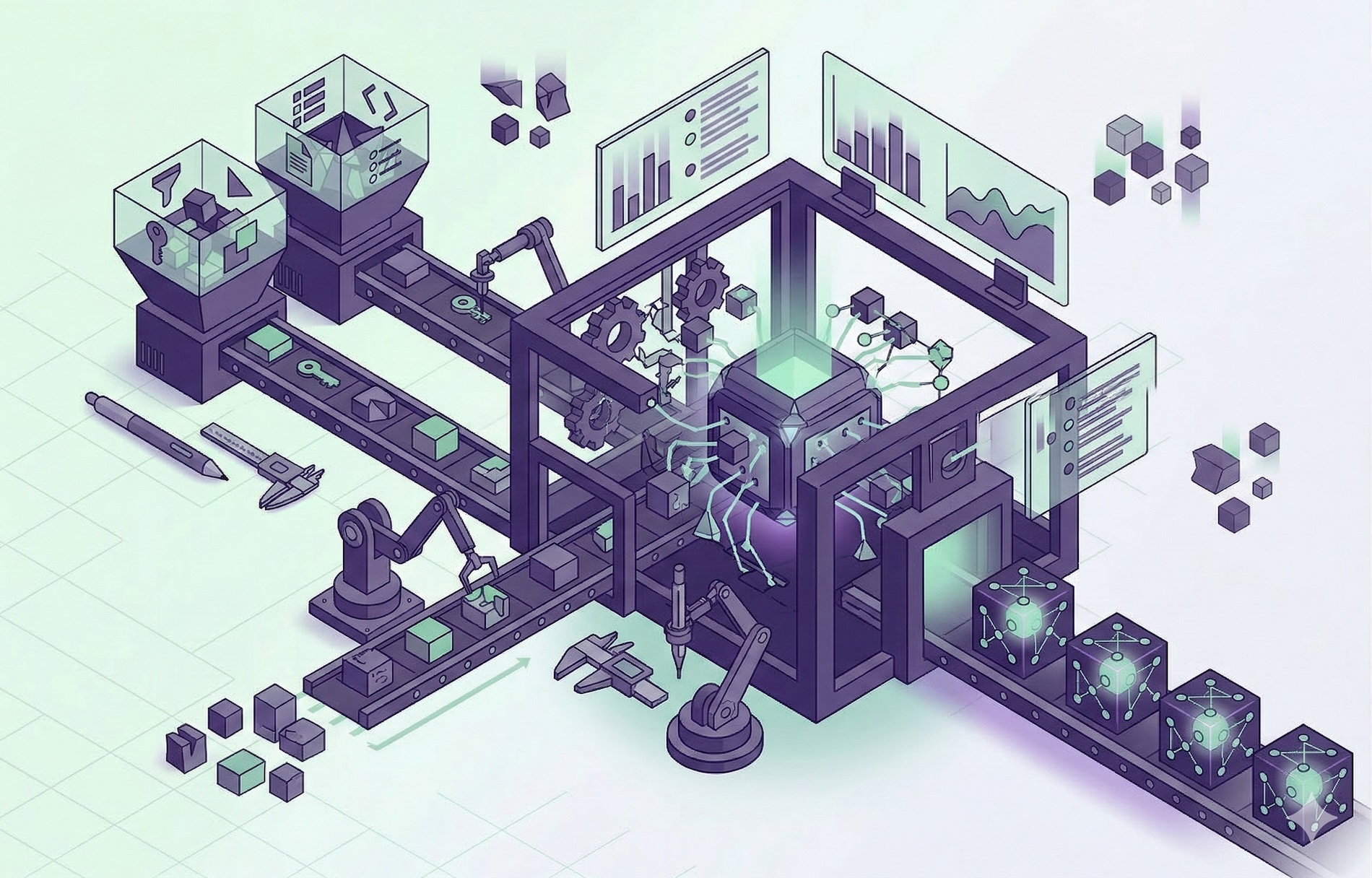
Most product teams build event schemas to answer questions about user behavior: What features drive retention? Where do users drop off? How do power users differ from casual ones? But there's a second opportunity hiding in plain sight. The same behavioral data you're collecting for analytics can become training data for AI models. You just need to design your schema with both purposes in mind from the start.
The Dual-Purpose Opportunity
The difference between a basic event schema and one that serves both analytics and AI training comes down to intentional structural decisions. When you capture not just *what* happened but *why* it likely happened, *how* it relates to other actions, and *what context* surrounded it, you create a dataset that helps machines understand human behavior patterns. This matters more as product teams add LLM-powered features, personalization engines, and predictive models. These systems need to learn from actual user interactions rather than synthetic data. According to McKinsey's 2024 analytics report, companies that design multi-purpose data schemas see 40% better ROI on their data infrastructure investments compared to those building single-use systems. According to Forrester Research, 78% of product organizations plan to integrate AI-powered features into their core products by 2026, creating urgent demand for quality training datasets.
According to Gartner's 2024 AI research, 65% of organizations now use behavioral data to train internal AI models, up from just 23% in 2022.
The Impact of Contextual Metadata
According to a 2023 study by the Stanford AI Lab, event schemas that include contextual metadata improve model prediction accuracy by 40% compared to basic action-only tracking.
The good news: designing for this dual purpose doesn't require duplicate instrumentation or complex infrastructure. It requires thinking differently about semantic clarity, context preservation, and data relationships when you build your tracking plan. Get it right, and your product analytics platform becomes a source of high-quality, proprietary training data that reflects real user intent.
Why Your Event Schema Is Untapped AI Training Data
Behavioral event data has three characteristics that make it valuable for training AI models: it's sequential, contextual, and reflects actual human decision-making under real constraints.
Unlike synthetic datasets or scraped web content, product events capture authentic user intent. When someone searches for "project templates," then filters by "marketing," then previews three options before selecting one, that sequence reveals decision-making logic. No synthetic data can replicate this. Language models and recommendation systems trained on these patterns learn not just what users do, but how they think through problems in your product domain. According to research from Google, behavioral event data improves model accuracy by up to 40% compared to models trained solely on synthetic datasets. This improvement is particularly strong for predicting user intent and next-action recommendations.
The sequential nature of event streams provides temporal context that most training data lacks. AI models can learn that certain actions predict others. They can see that user behavior changes over time. They can understand that context from five steps ago influences current decisions. This temporal richness helps models understand causality rather than just correlation.
Product events also come pre-labeled with outcomes. Conversion events, retention signals, feature adoption markers—these are ground truth labels that would cost thousands of hours to manually annotate in other datasets. According to Amplitude's analysis of product analytics implementations, manual annotation of behavioral data for machine learning typically costs between $50-200 per hour. This makes pre-labeled product events worth an estimated $100,000+ annually for mid-sized product teams. When your schema captures both the journey and the destination, you're creating supervised learning opportunities automatically.
But most event schemas aren't designed to preserve this value. They optimize for aggregation and reporting. They strip away the semantic richness and contextual connections that make behavioral data useful for training. Generic event names like "button_clicked" or flat property structures that lose relationships between data points turn potentially valuable training data into noise.
5 Design Principles for AI-Ready Event Schemas
1. Semantic Naming That Captures Intent
Event names should describe user intent, not just interface interactions. Compare "buttonclicked" versus "documentexportinitiated" or "collaborationinvite_sent." The second approach embeds meaning into the event name itself. This helps both analysts and AI models understand what the user was trying to accomplish. This semantic clarity becomes crucial when models need to infer user goals from behavioral sequences.
2. Context Richness Through Structured Properties
Every event should carry enough context to be understood independently while also linking to related events. Include user state (ispayingcustomer, accountagedays, featuretier), session context (referralsource, devicetype, activesessionduration), and action context (searchqueryused, filterapplied, previous_step). This layered context helps models understand not just what happened, but under what circumstances. According to a study by MIT's Computer Science and Artificial Intelligence Laboratory, adding just 5-7 contextual properties per event increases machine learning model performance by 25-35% for user behavior prediction tasks.
3. Temporal Consistency and Sequence Preservation
Maintain strict timestamp precision and include sequence indicators that preserve action order. Properties like sessioneventnumber, dayssincesignup, or timesincelast_action help models understand timing relationships. Consistent timezone handling and timestamp formats ensure temporal data remains useful across different analysis contexts.
4. Relationship Mapping Between Events
Design your schema to explicitly connect related events. Include properties like parenteventid for multi-step flows, correlationids for related actions across sessions, or funnelstage indicators that show where an event fits in larger user journeys. These relationship markers help AI models understand dependencies and causal chains that simple sequential data misses.
5. Outcome Attribution and Success Signals
Tag events with success indicators and ultimate outcomes. Properties like conversionattributed, ledtoupgrade, or resultedinretention give models clear learning signals. Include both immediate outcomes (taskcompleted: true) and longer-term results (userstillactive_30d: true). This way models can learn both short-term patterns and delayed effects.
Practical Implementation Without Overhead
You don't need a complete schema overhaul to start capturing AI-ready data. Begin with your highest-value user flows—onboarding, core feature adoption, conversion paths. For these critical journeys, enrich your existing events with the five principles above.
Use Countly's custom event properties to add contextual layers without changing your event structure. Create a naming convention guide that your team follows for new instrumentation. Implement a validation layer that checks
Key Takeaways
• Product event schemas traditionally designed for analytics (tracking user behavior, retention, and drop-offs) can simultaneously serve as valuable AI training data with intentional upfront design choices.
• The key to dual-purpose schemas is capturing not only *what* happened but also *why* it likely happened, *how* it relates to other actions, and *what context* surrounded the event.
• Building schemas with both analytics and AI training in mind from the start eliminates the need for separate data collection systems and maximizes the value of behavioral data already being gathered.
• Structural decisions in schema design determine whether your event data remains siloed for basic analytics or becomes a rich dataset capable of training AI models to understand user patterns and intent.
Frequently Asked Questions
Do I need to rebuild my existing event schema from scratch to make it AI-ready?
No, you can incrementally enhance your current schema by adding contextual fields and relationship markers to new events while maintaining backward compatibility. Start by identifying your highest-value user journeys and enriching those event streams first, then gradually expand to other areas as you validate the approach.
What's the minimum amount of data needed before my event schema becomes useful for AI training?
You'll want at least several thousand complete user sessions with rich contextual data before attempting to train meaningful models. However, you can start designing for AI readiness immediately—the structural decisions you make today determine whether your data will be usable once you reach sufficient volume.
Won't adding extra fields for AI purposes slow down our event tracking and bloat our database?
The additional fields typically add negligible overhead (usually 10-30% more data per event) and modern event platforms handle this easily. The key is being selective about what context you capture—focus on fields that serve both your immediate analytics needs and future AI applications rather than speculatively logging everything.
How do I know which contextual fields will actually matter for AI training later?
Focus on capturing the "why" behind actions (user intent signals, prior states, environmental factors) and the "how" of sequences (session context, feature interactions, outcome markers). These tend to be universally valuable for both understanding user behavior analytically and training models to predict or replicate that behavior.
Sources
1. https://segment.com/academy/collecting-data/naming-conventions-for-clean-data/
2. https://www.oreilly.com/library/view/designing-data-intensive-applications/9781491903063/
3. https://developers.google.com/analytics/devguides/collection/protocol/v1/parameters
4. https://arxiv.org/abs/2010.02502


Posts that our readers love

to grow your product
is here.