How to design an event tracking schema for connected IoT devices

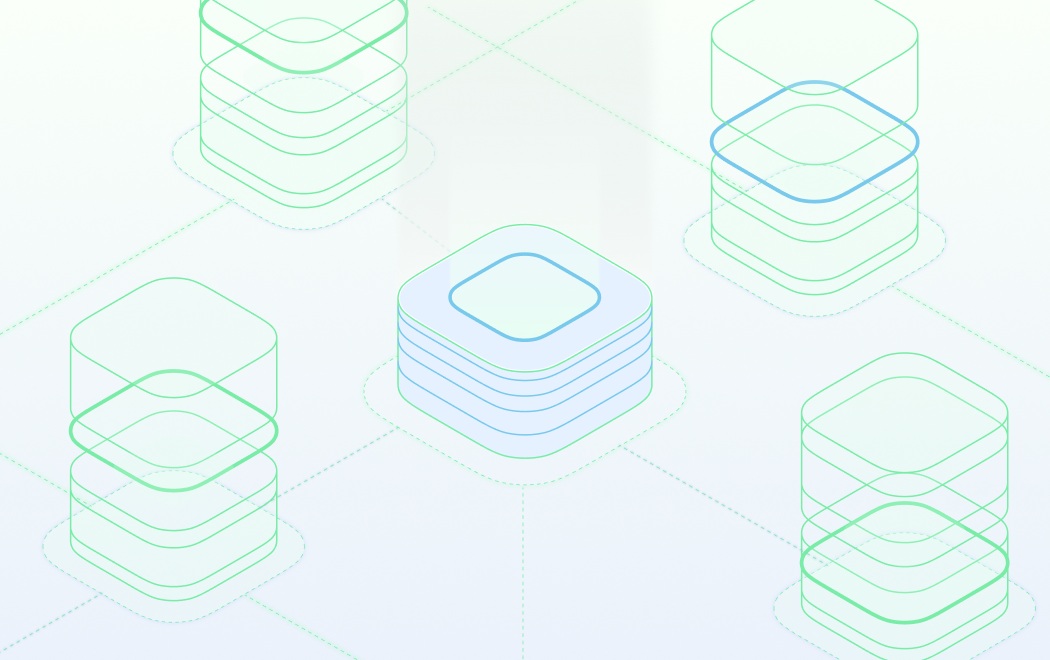
IoT devices generate massive streams of behavioral data, but without a well-designed event tracking schema, that data becomes noise rather than insight. A schema defines what events you capture, what properties describe them, and how they relate to user actions across device lifecycles. For developers building connected products, the difference between useful analytics and data chaos often comes down to decisions made before the first event fires.
Understanding IoT Event Tracking Fundamentals
Event tracking in IoT differs fundamentally from web or mobile analytics because devices operate in constrained environments with intermittent connectivity, limited processing power, and extended operational lifecycles. A smart thermostat might send temperature readings every fifteen minutes for years, while a connected vehicle could generate hundreds of events per trip across dozens of subsystems. The schema you design needs to accommodate both high-frequency telemetry and infrequent state changes without overwhelming your analytics infrastructure or creating gaps in your data.
The core components of any IoT event schema include the event name, timestamp, device identifier, and a properties object containing contextual data. Unlike traditional analytics where session boundaries are clear, IoT devices blur these lines since a refrigerator never truly "logs out" and industrial sensors may operate continuously for months. Your schema must account for this always-on nature while still enabling meaningful segmentation and analysis. According to a 2024 IoT Analytics report, organizations that implement structured event schemas from the outset reduce their time-to-insight by 40% compared to those retrofitting schemas onto existing data streams.
The relationship between events and device state represents another critical consideration. Some events describe discrete actions like "dooropened" or "firmwareupdate_completed," while others capture continuous measurements such as temperature, vibration, or power consumption. Your schema should distinguish between these types clearly, using different naming conventions or property structures to make the distinction obvious to anyone querying the data. This separation becomes essential when building dashboards or setting up alerts, as the appropriate aggregation methods differ substantially between event types.
Establishing Naming Conventions and Event Hierarchy
A consistent naming convention serves as the foundation for a maintainable event schema, particularly in IoT environments where multiple device types, firmware versions, and integration points coexist. The object-action pattern provides a reliable starting point, structuring event names as "nounverb" combinations like "sensoractivated" or "batterydepleted." This approach scales naturally as your product line expands and makes event catalogs immediately readable to new team members. Avoid generic names like "update" or "error" that require context to interpret, instead opting for specific descriptors such as "temperaturereadingfailed" or "connectivityrestored."
Hierarchical organization through namespacing prevents schema sprawl as your IoT ecosystem grows. Prefixing events with device type or subsystem creates natural groupings: "hvaccompressorstarted," "hvacfanspeedchanged," and "hvactemperature_set" all clearly belong to the same domain. This structure proves invaluable when implementing role-based analytics access or building device-specific dashboards. Many analytics platforms including Countly, Amplitude, and Mixpanel support event filtering by prefix, making namespaced events easier to query and visualize without custom configuration.
The tension between specificity and maintainability requires careful balance. Creating separate events for "dooropenedbyuser" and "dooropenedbyautomation" provides clearer analytics but doubles your event catalog size. A better approach uses a single "dooropened" event with a "triggertype" property capturing the distinction. Properties offer flexibility that event proliferation cannot match, allowing you to slice data in ways you might not anticipate during initial schema design. Reserve separate events for genuinely different actions rather than variations of the same behavior.
Defining Properties and Context Data
Properties transform raw events into actionable intelligence by capturing the context surrounding each action. Every IoT event should include a core set of standard properties: deviceid, timestamp, firmwareversion, connectiontype, and batterylevel where applicable. These universal attributes enable cohort analysis across your device fleet and help identify patterns that single-event analysis would miss. Standardizing these properties across all events ensures consistency and reduces the cognitive load when writing queries or building dashboards.
Device-specific properties add depth without cluttering the schema when implemented correctly. A smart lock needs properties like "lockmethod" (keypad, app, physical key) and "userid," while a industrial sensor requires "readingaccuracy" and "calibrationdate." Rather than forcing every device type into an identical property structure, design a base schema that all devices inherit, then extend it with type-specific properties as needed. This approach maintains consistency while acknowledging that different device categories serve different analytical needs.
Property data types matter more in IoT analytics than developers often recognize. Storing a battery percentage as a string ("85%") rather than a number (85) prevents aggregation and makes threshold-based analysis impossible. Similarly, timestamps should follow ISO 8601 format consistently across all events rather than mixing Unix epochs, formatted strings, and localized date representations. Documenting these type requirements in your schema prevents data quality issues that only surface during analysis. Many analytics platforms perform automatic type inference, but explicit typing in your event implementation code eliminates ambiguity and catches errors before data reaches your analytics backend.
Handling Connectivity Constraints and Offline Events
IoT devices frequently operate in environments with unreliable connectivity, requiring your event schema to accommodate offline operation and eventual data synchronization. Implementing local event queuing ensures no data loss during network outages, but introduces complexity around event ordering and deduplication. Your schema should include a client-generated event ID and a queue position indicator, allowing your analytics platform to reconstruct the actual sequence of events even when they arrive out of order. This proves critical for understanding device behavior during connectivity loss, which often represents the most important time to analyze.
Batching strategy directly impacts both device battery life and data freshness, requiring tradeoffs embedded in your schema design. High-frequency events like sensor readings can be aggregated locally on the device, sending summary statistics (min, max, mean, count) rather than individual measurements. Your schema needs to differentiate between raw events and aggregated events, potentially using an "aggregation_window" property to indicate the time span each summarized event represents. This approach reduces transmission overhead by 90% or more while retaining sufficient detail for meaningful analysis.
Event prioritization becomes necessary when bandwidth or power constraints limit transmission capacity. Your schema can include a priority field distinguishing critical events (security breaches, system failures) from routine telemetry, allowing devices to transmit important events immediately while deferring or dropping low-priority data. This requires careful consideration during schema design since retrofitting priority levels after deployment complicates historical data analysis. Some implementations use separate event pipelines for different priority tiers rather than a single unified schema, trading simplicity for more granular control over data flow.
Common Schema Design Mistakes
The most prevalent error in IoT event schema design involves capturing insufficient context, particularly around the device environment and operational state. An event indicating "motorstopped" tells you what happened but not whether this was expected maintenance, an emergency shutoff, or a system failure. Including properties like "stopreason," "operatinghourssincemaintenance," and "precedingerror_codes" transforms the event from a data point into a diagnostic tool. Developers often discover these gaps only after deploying thousands of devices, when adding new properties requires firmware updates across the entire fleet.
Over-nesting property structures represents another common pitfall that complicates both event transmission and analysis. While JSON supports arbitrary nesting, analytics platforms generally work best with flat or minimally nested structures. An event with properties like {"location": {"building": {"floor": {"room": "101"}}}} proves harder to query than {"building": "A", "floor": "3", "room": "101"}. Some analytics tools flatten nested structures automatically, but inconsistent flattening logic across platforms makes portability difficult. Design your schema with flat properties unless nesting provides clear analytical value, and document the maximum nesting depth your schema permits.
Strategic Considerations for Schema Evolution
IoT event schemas must evolve as products mature, but changes require careful planning since devices in the field may run different firmware versions simultaneously for months or years. Implementing semantic versioning for your event schema allows analytics logic to handle multiple schema versions concurrently, applying appropriate transformations based on the schema version property included with each event. This approach prevents breaking changes from disrupting dashboards or alerts while giving you flexibility to improve the schema over time. New properties should be optional by default, with analytics queries handling their absence gracefully.
The decision between broad generic events with many properties versus narrow specific events with fewer properties shapes your schema's long-term maintainability. Generic events like "devicestatechanged" with a "state" property scale easily as you add device capabilities, but can make specific queries more complex. Specific events like "devicepoweredon" and "deviceenteredsleep_mode" create clearer analytics but expand your event catalog quickly. Most successful IoT schemas use specific events for user-facing actions and state transitions while reserving generic events for system-level telemetry. This hybrid approach balances clarity with maintainability as your product ecosystem grows.
Key Takeaways
• Design event schemas with offline operation and eventual connectivity in mind, using client-generated IDs and queue positions to maintain event ordering during network disruptions
• Implement consistent naming conventions using object-action patterns and namespace prefixing to organize events by device type or subsystem, making schemas maintainable as product lines expand
• Include core standard properties across all events (deviceid, firmwareversion, timestamp, connection_type) while extending with device-specific properties that add analytical value
• Plan for schema evolution from the start by implementing semantic versioning and making new properties optional to handle multiple firmware versions operating simultaneously across your device fleet
Sources
[State of IoT 2024 - IoT Analytics](https://iot-analytics.com/product/state-of-iot-2024/)
[Event Tracking Best Practices - Countly](https://support.count.ly/hc/en-us/articles/360037753511-Events)
[IoT Data Management Strategies - IEEE Internet of Things Journal](https://ieeexplore.ieee.org/xpl/RecentIssue.jsp?punumber=6488907)
FAQ
Q: How granular should event tracking be for high-frequency IoT sensors?
A: Balance data fidelity against transmission and storage costs by implementing local aggregation for routine measurements, sending statistical summaries rather than individual readings. Reserve high-frequency individual events for anomaly detection or debugging scenarios where raw data proves essential. Most production deployments find that five-minute aggregation windows provide sufficient detail for operational analytics while reducing data volume by 95% compared to per-second event streams.
Q: Should device telemetry use the same schema as user interaction events?
A: Maintain separate but related schemas for system telemetry versus user actions, as they serve different analytical purposes and have distinct property requirements. System events typically include hardware metrics and environmental conditions, while user events focus on features utilized and outcomes achieved. Both should share standard properties like device_id and timestamp to enable correlation analysis, but forcing them into identical structures creates unnecessary complexity and reduces clarity.
Q: How do you handle events from devices that can't synchronize time accurately?
A: Implement dual timestamps: a device-generated timestamp capturing when the event occurred locally and a server-received timestamp recording when the event reached your analytics platform. Use the device timestamp for understanding user behavior sequences and the server timestamp for cross-device analysis where precise synchronization matters. For devices with significant clock drift, include a "time_uncertainty" property indicating confidence in the device timestamp's accuracy.
Posts that our readers love
to grow your product
is here.