Optimizing KYC Onboarding: Reducing Friction Without Compromising Compliance

The FinTech Paradox: Security vs. Conversion
For FinTech executives, the Know Your Customer (KYC) process represents a critical paradox. It is a regulatory absolute, yet it remains the primary point of friction in the user acquisition journey. Industry data suggests that up to 68% of users abandon financial applications during the onboarding phase. The challenge lies in optimizing this funnel without exposing sensitive Personally Identifiable Information (PII) or violating strict GDPR data minimization principles.
Legacy analytics tools often rely on third-party cloud processing, which introduces unacceptable risk profiles for banking institutions. This case study explores how a privacy-centric approach to analytics allows product teams to diagnose and repair funnel leaks while maintaining total data sovereignty.
The Solution: Identifying and Diagnosing Funnel Leaks
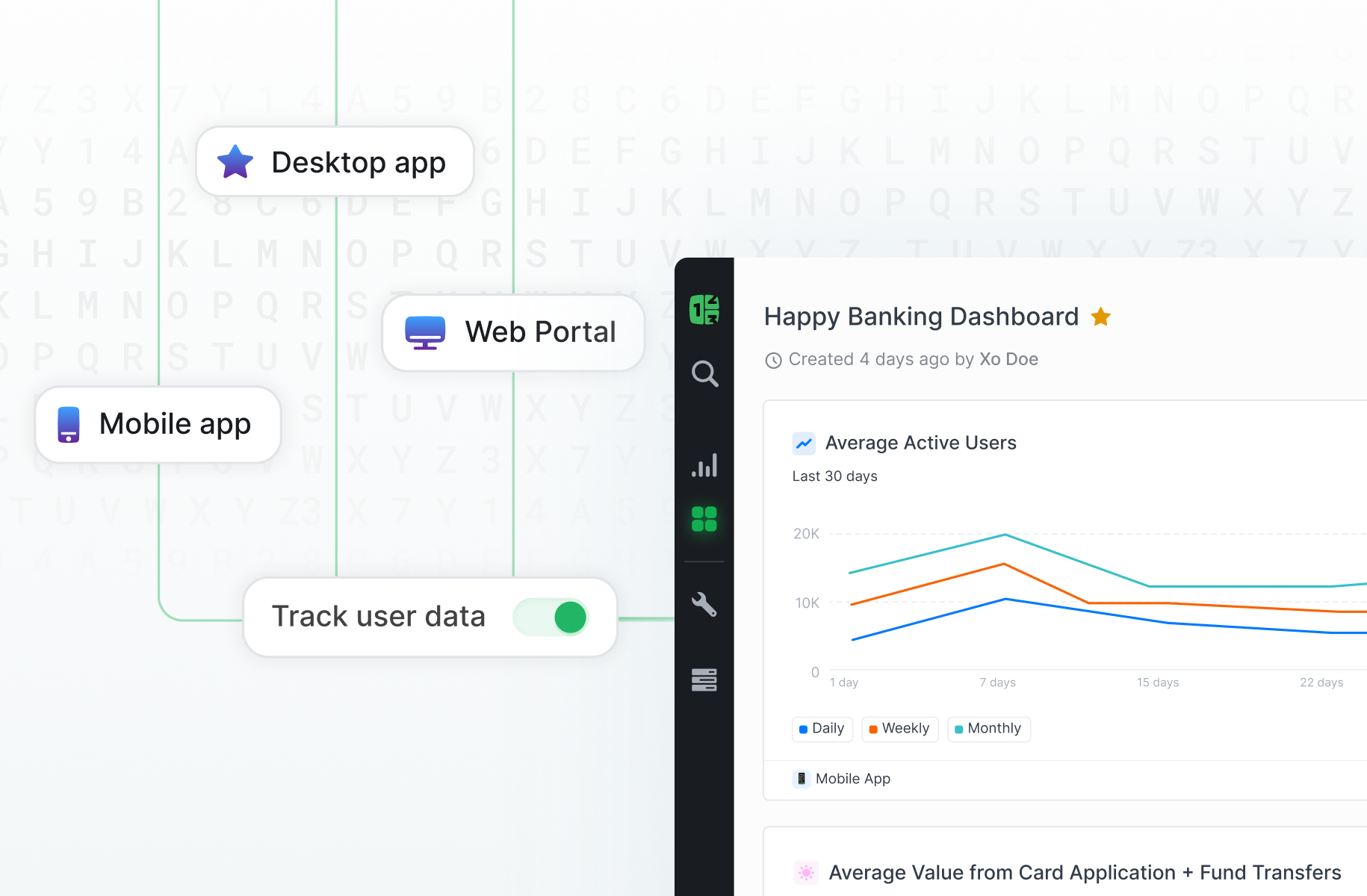
Optimization begins with precise visualization and granular analysis of user movement. By moving beyond aggregate bounce rates, product managers can pinpoint exactly where the friction occurs.
Phase 1: Identifying the Drop-Off with Granular Funnels
In a standard banking app, the onboarding funnel typically consists of five stages: App Install, Registration, Identity Verification (ID Upload), Biometric Scan, and Account Activation.
To identify the exact friction point, product managers must deploy Funnels Analysis. In a recent deployment for a European digital bank, Countly telemetry revealed a 45% drop-off specifically between 'ID Upload' and 'Biometric Scan'. This isolated the problem: users were not abandoning the concept of the account; they were failing the execution of the document verification.
Phase 2: Diagnosing the UX Failure
Once the macro-level bottleneck is identified, the analysis must shift to the micro-level interactions. Why is the upload failing?
- Technical Latency: Is the image processing timing out?
- UI Clarity: Are users confused by the camera overlay instructions?
- Error Handling: Are validation errors (e.g., "Glare detected") clear or generic?
By tagging custom events on specific UI elements—such as the "Retake Photo" button press rate—teams can differentiate between technical failures and user error. This requires a platform capable of handling high-volume event data in real-time, allowing for immediate iteration on the interface.
The Product: A Compliance-First Architecture
Optimizing the funnel cannot come at the cost of user privacy. Most marketing analytics platforms scrape data indiscriminately, often capturing PII from form fields. For a FinTech entity, this is a compliance violation waiting to happen.
Countly addresses this through a strict governance model. By utilizing our Privacy & Compliance features, organizations can mask sensitive data fields (such as passport numbers or OCR results) at the SDK level before data leaves the user's device. This ensures that while you track the event of a successful upload, you never process or store the content of the upload within the analytics database.
Conclusion: Owning Your Data Journey
Reducing KYC friction requires a dual focus: rigorous behavioral analysis to smooth the user path and an unyielding commitment to data security. By hosting analytics on-premise or in a private cloud via the Enterprise Edition, financial institutions eliminate third-party data risks. This approach transforms KYC from a compliance hurdle into a competitive advantage—delivering a seamless onboarding experience that users trust.
Frequently Asked Questions
How can we track KYC form completion rates without storing PII?
Countly allows you to mask specific input fields at the SDK level. You can track the event 'Field Filled' or 'Form Submitted' and analyze the duration or error rates associated with that field, without ever transmitting the actual text input (e.g., the Social Security Number or Name) to the server.
Does Countly support on-premise hosting for strict banking regulations?
Yes. Countly is designed with a 'privacy-by-design' architecture and offers a self-hosted Enterprise Edition. This allows financial institutions to keep all analytics data within their own infrastructure, satisfying strict data residency and sovereignty requirements (such as those found in Switzerland, Germany, or under GDPR/CCPA).
Can we correlate application crashes with KYC drop-offs?
Absolutely. By integrating Countly's Crash Reporting plugin with Funnels, you can segment users who experienced a crash during the onboarding process. This helps distinguish between users who left due to UI friction versus those forced out by technical instability.
Is it possible to view individual user journeys for debugging?
Yes, through the User Profiles feature. While adhering to privacy settings, authorized admins can view the granular event timeline of a specific user ID (anonymized or internal reference ID) to see the exact sequence of actions taken before a drop-off, aiding in precise troubleshooting.


Posts that our readers love


to grow your product
is here.