Why IoT product teams need on-premise analytics for edge device privacy

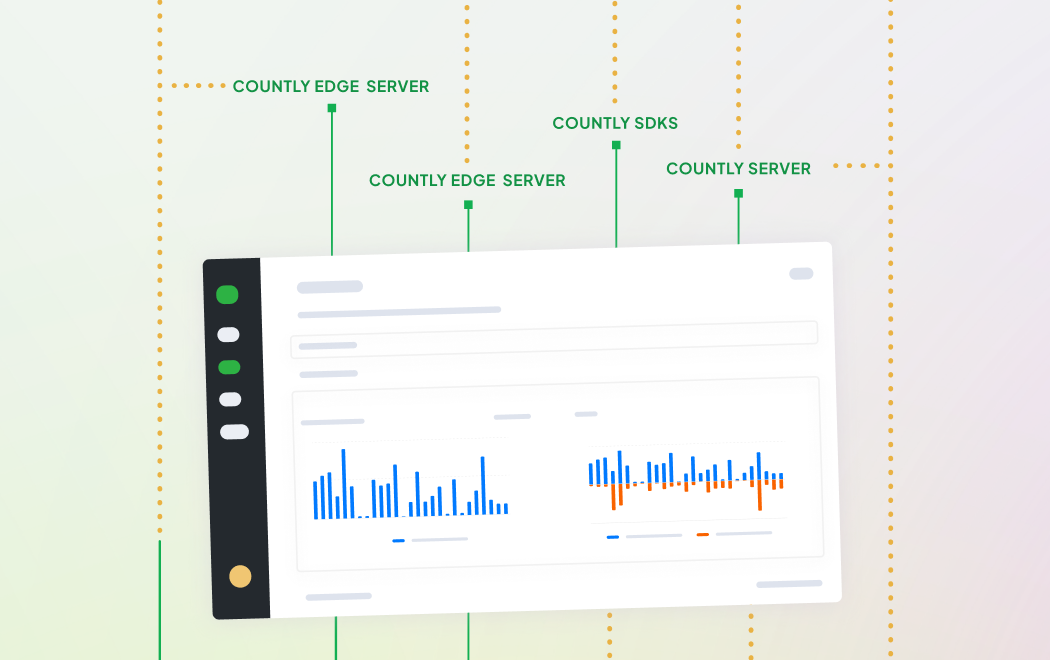
IoT devices collect unprecedented volumes of usage data, from industrial sensors tracking equipment performance to connected medical devices monitoring patient health metrics. As these devices proliferate across regulated industries and privacy-conscious markets, product teams face a fundamental tension: they need granular analytics to improve device performance and user experience, yet cloud-based data collection increasingly conflicts with data sovereignty requirements and edge computing architectures. For senior technology leaders managing IoT product portfolios, the analytics infrastructure decision has evolved from a vendor selection exercise into a strategic architecture choice that affects regulatory compliance, customer trust, and go-to-market velocity across different jurisdictions.
The Data Locality Problem in IoT Analytics
IoT devices generate data at the network edge, often in environments where connectivity is intermittent, bandwidth is constrained, or regulatory frameworks prohibit data transmission to external servers. A manufacturing floor with thousands of connected sensors, for instance, produces telemetry data that must be processed locally to enable real-time decision-making, while healthcare wearables in European markets face GDPR's strict limitations on cross-border data transfers. Traditional cloud analytics platforms assume reliable connectivity and centralized data aggregation, an assumption that breaks down when dealing with edge deployments where local processing is not optional but architecturally required.
The gap between where IoT data originates and where analytics platforms expect to process it creates operational friction that affects product development cycles. When product teams cannot analyze user behavior patterns from devices deployed in regulated environments, they lose visibility into how products perform in critical market segments. According to a 2023 IoT Analytics survey, 67% of industrial IoT deployments cited data sovereignty concerns as a barrier to adopting cloud-based analytics solutions. This visibility gap forces teams into reactive rather than proactive product management, discovering issues through customer complaints rather than telemetry analysis.
Beyond regulatory requirements, the technical architecture of modern IoT systems increasingly relies on edge computing to reduce latency, conserve bandwidth, and maintain functionality during network outages. When analytics infrastructure cannot mirror this architecture by processing data at the edge, it becomes misaligned with the fundamental design principles of the products it's meant to improve. Product teams end up making architectural compromises that weaken either their analytics capabilities or their edge computing strategy, when the correct solution is an analytics approach that embraces data locality as a core principle rather than treating it as an exception case.
Privacy by Design Versus Privacy by Policy
Cloud-based analytics platforms typically address privacy through policy controls, access management, and contractual data processing agreements. These mechanisms place privacy compliance in the policy layer, depending on organizational discipline and vendor trustworthiness rather than technical architecture to protect sensitive data. While this approach works for many use cases, IoT deployments in healthcare, finance, and critical infrastructure increasingly demand privacy by design, where technical architecture itself prevents unauthorized data access or transmission. The difference matters because policies can be misconfigured or violated, while architectural constraints cannot be bypassed without rebuilding the system.
On-premise analytics implements privacy at the infrastructure level by ensuring data never leaves the environment where it was generated. When a connected medical device collects patient interaction data, that information can be analyzed locally within the healthcare provider's infrastructure without ever traversing external networks or residing in multi-tenant cloud environments. This architectural approach transforms privacy from a compliance burden requiring constant monitoring into an inherent property of the system, reducing the attack surface and simplifying security audits. For CTOs managing risk across multiple product lines, this shift from policy-based to architecture-based privacy represents a fundamental improvement in defensibility.
The architectural approach also addresses a subtler privacy concern that policy-based solutions struggle with: the trust boundary between device manufacturers and device operators. A hospital deploying connected monitoring equipment may trust the manufacturer to build reliable devices but may not trust them with continuous access to patient data, even under strict contracts. On-premise analytics allows the hospital to maintain complete data custody while still benefiting from the manufacturer's analytics capabilities through self-hosted deployments. This separation of concerns enables business relationships that would be impossible under a cloud-only model, particularly in markets where data custodianship carries legal liability.
The Real-Time Performance Advantage
Edge IoT deployments often require real-time or near-real-time analytics to drive operational decisions, from predictive maintenance alerts in industrial equipment to immediate user feedback in consumer devices. When analytics data must traverse the network to cloud infrastructure for processing, latency increases by orders of magnitude compared to local processing. This latency matters differently depending on the use case: a consumer app might tolerate delayed analytics, but an industrial control system using behavioral data to optimize operations cannot wait for round-trip cloud processing. On-premise analytics collocated with edge devices eliminates this network latency entirely, enabling analytics-driven features that would be technically infeasible with cloud architectures.
The performance advantage extends beyond latency to bandwidth efficiency, a critical consideration for IoT deployments with thousands of connected devices. Transmitting raw telemetry from each device to cloud infrastructure consumes bandwidth that may be expensive, limited, or simply unavailable in remote deployments. On-premise analytics processes data locally and transmits only aggregated insights or exceptions, reducing bandwidth requirements by up to two orders of magnitude. This efficiency transformation changes the economics of IoT analytics from a variable cost that scales with device count and data volume to a fixed infrastructure cost amortized across all devices.
Local processing also enables more sophisticated analytics techniques that would be prohibitively expensive at cloud scale. When computation happens near the data source, product teams can implement complex behavioral analysis, anomaly detection, and predictive models without concern for cloud processing costs that scale linearly with data volume. This cost structure reversal makes previously impractical analytics approaches viable, allowing product teams to extract more value from device telemetry without triggering runaway infrastructure costs. The result is richer product insights that inform better development decisions without requiring corresponding increases in analytics budgets.
Common Implementation Pitfalls
Many IoT product teams approaching on-premise analytics underestimate the operational differences between self-hosted and cloud infrastructure, leading to implementations that reproduce cloud assumptions in edge environments. A common mistake is deploying analytics infrastructure that assumes reliable power, cooling, and network connectivity comparable to data center conditions, when edge environments may offer none of these guarantees. Product teams need analytics platforms designed for edge deployment from the ground up, with consideration for hardware constraints, intermittent connectivity, and limited local technical support. Solutions like Countly, InfluxDB, and TimescaleDB offer self-hosted options, but successful implementations require matching the platform's operational requirements to the actual edge environment rather than aspirational data center conditions.
Another frequent pitfall involves creating isolated analytics silos that provide local visibility without enabling cross-deployment insights. While data sovereignty requirements may prevent centralizing raw telemetry, product teams still need mechanisms to aggregate anonymized or summarized metrics across deployments to understand product performance globally. Effective on-premise analytics architectures include federation capabilities that allow local instances to share non-sensitive insights with central product teams while maintaining strict data custody boundaries. Without this federation layer, product teams lose the ability to identify patterns that span deployments, forcing them to choose between privacy and global product intelligence when they should be able to achieve both.
Strategic Positioning for Regulated Markets
On-premise analytics capability increasingly functions as a market access enabler rather than just a technical choice, particularly in jurisdictions with strict data sovereignty requirements. The European Union's GDPR, China's Personal Information Protection Law, and sector-specific regulations like HIPAA in healthcare create compliance frameworks where cloud-based analytics may be legally permissible but commercially disadvantageous. Organizations in these markets actively prefer vendors who can demonstrate data locality through technical architecture rather than contractual assurances, making on-premise analytics a competitive differentiator in procurement processes. Product teams that build on-premise analytics capabilities early position their products for regulated markets that competitors with cloud-only architectures cannot easily enter.
This strategic advantage compounds over time as data protection regulations proliferate and strengthen globally. Rather than reacting to each new regulatory regime with point solutions and compliance patches, products designed around data locality principles adapt more easily to evolving requirements. The architectural flexibility to deploy analytics infrastructure wherever the customer requires it future-proofs IoT products against regulatory uncertainty, reducing the risk that new data protection laws will suddenly close market access. For CTOs planning multi-year product roadmaps, this regulatory resilience justifies the additional complexity of supporting on-premise deployments alongside or instead of cloud infrastructure.
Key Takeaways
• On-premise analytics enables IoT products to maintain functionality and collect product intelligence in edge deployments where cloud connectivity is limited, expensive, or architecturally incompatible with real-time processing requirements.
• Privacy by design through local data processing provides stronger guarantees than policy-based cloud privacy, reducing risk and enabling business relationships where data custody concerns would otherwise prevent adoption.
• Local analytics processing transforms bandwidth and compute economics, making sophisticated analysis techniques viable at scales where cloud costs would be prohibitive.
• Successful implementations require analytics platforms designed for edge operational constraints and federation architectures that enable global insights without centralizing sensitive raw data.
Sources
[IoT Analytics - Industrial IoT Adoption Report 2023](https://iot-analytics.com/product/industrial-iot-adoption-report-2023/)
[GDPR Official Text - European Commission](https://gdpr-info.eu/)
[Edge Computing and IoT: A Survey - IEEE](https://ieeexplore.ieee.org/document/9678847)
FAQ
Q: Can on-premise IoT analytics scale to handle millions of devices across distributed deployments?
A: On-premise analytics scales differently than cloud infrastructure but can absolutely handle large device populations through distributed deployment models. Each edge location runs its own analytics instance processing local devices, so scaling happens horizontally across locations rather than vertically in a central data center. Federation layers aggregate anonymized insights across locations to provide global visibility without creating data centralization that defeats privacy objectives.
Q: What are the operational overhead differences between on-premise and cloud IoT analytics?
A: On-premise deployments shift responsibility for infrastructure maintenance, updates, and security from the analytics vendor to your organization or your customers, requiring either internal DevOps capabilities or managed service partnerships. However, modern containerized deployments and automated update mechanisms have dramatically reduced this operational burden compared to legacy on-premise software. The overhead trade-off often favors on-premise in regulated industries where cloud compliance costs, data governance procedures, and vendor management create hidden operational burdens that exceed self-hosted infrastructure management.
Q: How do you maintain analytics consistency across cloud and on-premise deployments in hybrid IoT architectures?
A: Hybrid architectures work best when using analytics platforms that offer identical capabilities in both deployment models, ensuring product teams work with consistent data schemas, APIs, and analysis tools regardless of where infrastructure runs. Some deployments may use cloud analytics for non-regulated markets while deploying on-premise for customers with data sovereignty requirements, with a federation layer normalizing insights across both environments. The key is selecting analytics tooling designed for deployment flexibility rather than retrofitting cloud-only platforms for on-premise use or vice versa.


Posts that our readers love


to grow your product
is here.