Cohorts Explained: How Dynamic User Groups Level-up Your Analytics Strategy


In the fast-paced world of digital analytics, understanding your users isn't just about collecting data. It's about making sense of it in ways that drive real business decisions. Enter cohorts, a powerful tool that helps you segment users based on shared behaviors and characteristics. Whether you're a marketer trying to boost retention, a product manager analyzing user engagement, or a business owner seeking deeper insights, cohorts can transform how you view your audience. In this post, we'll break down what cohorts are, how they work, and why they're a game-changer in product analytics.
What Exactly Is a Cohort?
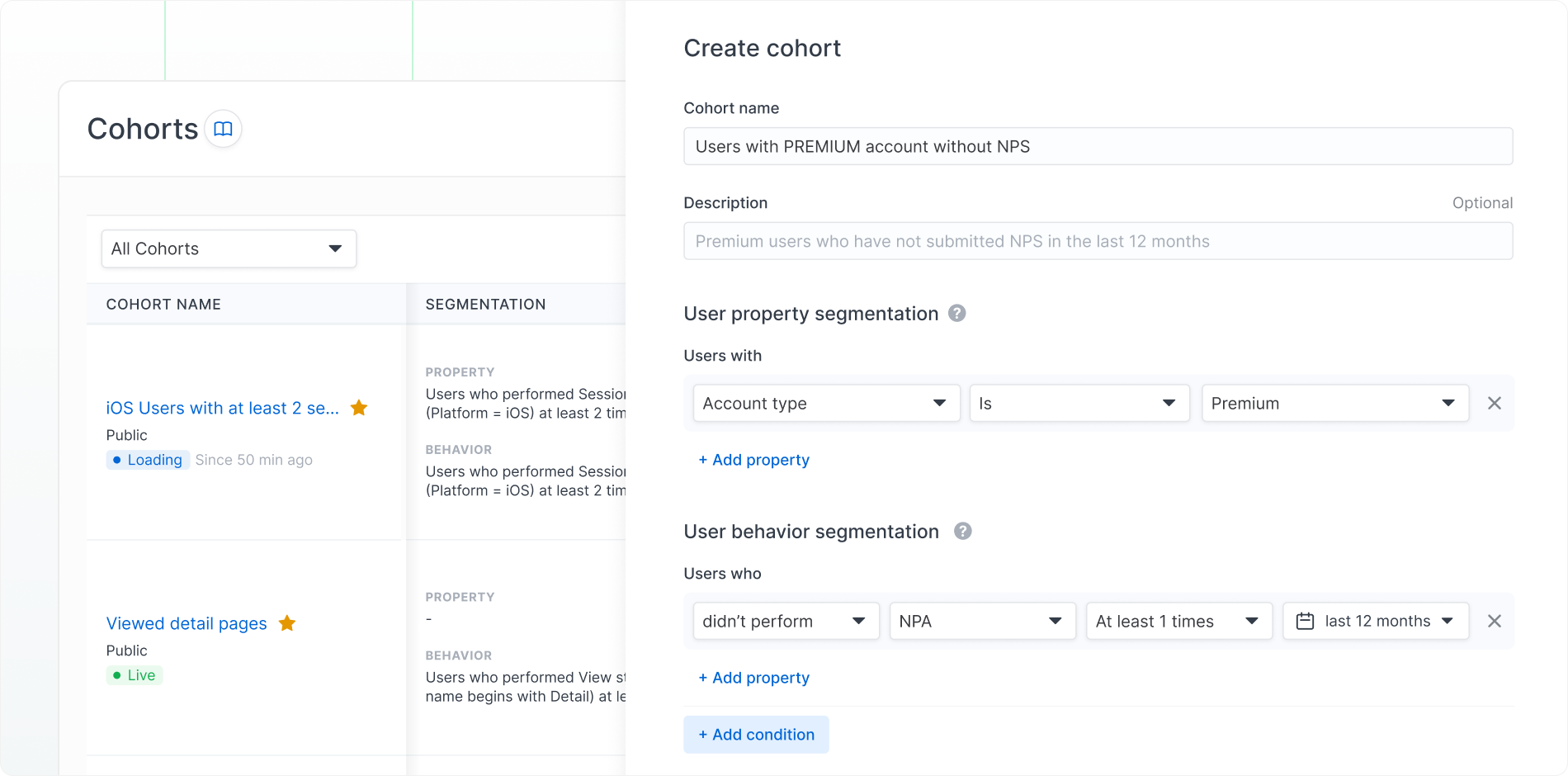
At its core, a cohort is a group of users who share common traits or behaviors over a specific period. But here's the key: it's not a static list you manually curate. Instead, think of it as a set of dynamic rules or conditions that automatically evaluate user data to determine who belongs in the group.
For example, you might create a cohort of "users who made their first purchase within the last 30 days" or "active app users in the past week." As users' behaviors change (eg. someone stops engaging or completes a new action), the system re-evaluates and updates the group in real-time. This fluidity ensures your insights are always current, without the hassle of constant manual updates.
Unlike traditional segmentation, which might rely on fixed demographics like age or location, cohorts focus on actions and timelines, revealing patterns that static groups often miss.
How Cohorts Work: The Magic Behind the Scenes
Cohorts operate by continuously checking user data against predefined conditions. When new data comes in, such as a session start, an event like a purchase, or a property update - the system assesses whether a user meets the criteria.
Real-Time vs. Non-Real-Time Cohorts
Most modern analytics tools, including Countly, default to real-time cohorts for efficiency. Here's how they stack up:
- Real-Time Cohorts: Updates happen instantly as new data arrives. If a user performs an action that qualifies (or disqualifies) them, they're added or removed on the spot. A daily background check handles time-based expirations, like inactivity over seven days.
- Non-Real-Time Cohorts (legacy option): These update only during a scheduled daily job, recalculating the entire group from scratch. While reliable, they're more resource-intensive and less immediate.
In Countly, you can toggle between modes via settings, but real-time is enabled by default for faster, more accurate insights.
Entering, Staying, and Exiting a Cohort
- Entering: Users join when they match the conditions, even if their qualifying action happened before the cohort was created. Countly scans historical data retroactively, so you get a complete picture from day one.
- Staying: As long as conditions hold, users remain. The system re-evaluates with every data update or edit to the cohort rules.
- Exiting: If a user's behavior shifts, e.g., they make a purchase in a "non-purchasers" cohort, they're removed automatically. Time-based exits, like falling outside a 7-day activity window, are checked daily.
This dynamic process means your cohorts evolve with your users, providing ongoing value without constant intervention.
The Benefits of Using Cohorts in Your Analytics
Why bother with cohorts? Here are some compelling advantages:
- Deeper User Insights: Track how specific groups behave over time, uncovering trends like retention drops or engagement spikes.
- Automated Efficiency: No more manual list-building. Cohorts update themselves, saving time and reducing errors.
- Targeted Strategies: Use cohorts for personalized marketing, A/B testing, or feature rollouts based on real behaviors.
- Flexibility for Any Business: Whether you're in e-commerce, gaming, or SaaS, cohorts adapt to your needs, from simple event-based groups to complex time-sensitive ones.
In tools like Countly, these benefits are amplified by real-time processing and historical evaluation, ensuring your data is both timely and comprehensive.
Practical scenarios
Cohorts shine in practical scenarios. Let's explore a few typical cases:
- Retention Analysis: Create a cohort of users who installed your app in a specific week. Monitor their activity over months to identify drop-off points and improve onboarding.
- Behavioral Targeting: For an e-commerce site, define a cohort of "users who viewed products but didn't purchase in the last 7 days." Send them targeted discounts to convert browsers into buyers.
- Engagement Tracking: In a mobile game, group "active players in the last 30 days" and analyze their session lengths to refine game features.
Real-World Use Cases and Examples
Crash Impact Mitigation (Product & Engineering)
- The Cohort: Users who experienced a fatal app crash or severe error in the past 7 days.
- The Action: Crossreference this cohort with your users retention dashboard to measure the exact impact bugs have on user churn. You can also proactively target this cohort with an in-app message apologizing for the bug, preserving user trust after a bad experience.
Power User Nurturing (Growth & Marketing)
- The Cohort: Highly engaged users who log in more than 5 times a week AND have completed a key conversion event (e.g., subscribing to a premium tier or spending over a certain amount).
- The Action: Leverage Countly's Ratings and Feedback tools to target only this specific cohort. Since they are your most successful users, they are the best audience to ask for a 5-star app store review or to invite for beta-testing a new feature.
Validating Feature Adoption (SaaS & Product Management)
- The Cohort: Users who have interacted with a newly launched feature at least once.
- The Action: Apply this cohort as a segment in Countly’s Drill and Retention features. Compare their average session duration and long-term retention rates against users who haven't used the feature.
Hyper-Local Geofencing (Retail & O2O - Online to Offline)
- The Cohort: Users who have a specific loyalty app installed and physically enter a predefined Geolocation (e.g., a 500-meter radius around your flagship physical store) between 12:00 PM and 5:00 PM.
- The Action: Since Countly handles location data and cohort grouping in real-time, you can trigger an automated Push Notification the moment they step into that geofence. Send them a time-sensitive "Welcome to the neighborhood! Show this notification at the register for a free coffee with any purchase" message to instantly drive foot traffic from the street right into your store.
Wrapping Up: Elevate Your Analytics with Cohorts
Cohorts aren't just a fancy feature. They're a strategic essential for anyone serious about user data. By dynamically grouping users based on behaviors, you gain actionable insights that static methods can't match. Platforms like Countly make it easy to implement, with real-time updates and intuitive controls. Ready to dive in? Explore Countly's cohort tools today and see how they can unlock hidden patterns in your data. Whether you're a beginner or a pro, starting with cohorts could be the boost your analytics needs.
Do you want to explore how Cohorts work inside Countly? Learn more in this documentation article.


Posts that our readers love



to grow your product
is here.