Customer Journey Analytics: How to Map and Measure the Full Path

Customer journey analytics is the practice of measuring how users actually move through every stage of their relationship with your product — across every touchpoint, over time — and using that data to understand and improve the experience. It connects the dots between a first website visit, the moment someone signs up, the features they adopt, and whether they stay or leave.
Most teams have fragments of this picture. They know their acquisition numbers, they have a funnel or two, they can pull retention. What they usually lack is the connected view — the ability to follow a real cohort of users from first touch to long-term loyalty and see where the path breaks. This guide explains what customer journey analytics is, how it differs from a customer journey map, and how to actually measure the journey rather than just diagram it.
Customer journey map vs. customer journey analytics
These two terms get used interchangeably, but they're different things, and the difference matters.
A customer journey map is a strategic artifact — usually a diagram — that lays out the stages a customer goes through (awareness, consideration, onboarding, adoption, retention), their goals at each stage, and the friction points you believe they hit. It's built from workshops, assumptions, and qualitative insight. It's a hypothesis about the journey.
Customer journey analytics is the data that tells you whether that hypothesis is true. Instead of describing the journey you imagine, it measures the journey users actually take — which steps they complete, where they drop off, how long each stage takes, and which paths lead to retention versus churn.
You need both. The map gives you a shared model of the experience; the analytics tell you where the map is wrong. The most common and expensive mistake is shipping decisions based on the map alone, never checking it against real behavior.
What customer journey analytics measures
Done properly, journey analytics answers questions a single funnel or retention report can't:
- Where do users drop off across the whole journey, not just within one funnel? The break is often between stages — the gap from sign-up to first meaningful action — rather than inside any single step.
- Which paths lead to retention? Users who reach a particular feature or milestone early may retain far better. Journey analytics surfaces the route that "good" users take so you can guide everyone toward it.
- How long does each stage take, and where does momentum stall? Time-to-value is often the hidden driver of churn.
- How does the journey differ by segment or source? The path for an enterprise user, a self-serve signup, and a referral may look nothing alike, and averaging them hides the truth.
The building blocks
You don't need a separate "journey analytics" product to do this — you need the right analytical building blocks working together on connected data:
Funnels measure conversion through a defined sequence of steps and show where users abandon a specific flow (checkout, onboarding, application). They're the close-up view of one segment of the journey.
Paths / flows show the actual routes users take through your product, including the ones you didn't anticipate. Where funnels test a hypothesis ("do users go A → B → C?"), path analysis reveals what really happens, surfacing unexpected detours and dead ends.
Cohorts group users by a shared starting point so you can follow a defined population across the entire journey over time, rather than blending everyone into one average.
Retention curves show whether users who completed the journey actually stick, closing the loop between early behavior and long-term value.
User profiles tie it all together at the individual level — a unified timeline of everything one user did across web, app, and product, so the journey isn't an abstraction but a real sequence of events you can inspect.
The power comes from these working on the same connected dataset. When funnels, paths, cohorts, and profiles all draw from one source of truth, you can move from "users drop off at step 3" to "which users, coming from where, doing what next" without exporting and stitching data by hand.
How to measure the customer journey
A practical sequence:
1. Define the journey stages that matter. Start from your customer journey map if you have one. Translate each stage into a measurable milestone event — signed_up, completed_onboarding, activated, subscribed, renewed.
2. Instrument those milestones cleanly. Journey analytics is only as good as the underlying events. A consistent, well-named event model is the prerequisite; messy tracking produces a messy, untrustworthy journey.
3. Build the macro funnel. Lay the milestones end to end and measure conversion between each. This is your top-line journey health — and it immediately shows the biggest leak.
4. Investigate the leaks with paths. Where the macro funnel shows a big drop, use path analysis to see what users actually do instead. The answer is often a detour or dead end you didn't know existed.
5. Segment and cohort. Split the journey by source, plan, or behavior. Compare cohorts over time to see whether changes are improving the path.
6. Connect to retention. Tie journey completion back to long-term retention so you can prove which early milestones actually predict lasting value — and prioritize getting more users to them.
7. Act in-context. The point of finding a drop-off is to fix it. The tightest loop is when you can trigger a relevant intervention — an in-app guide, a well-timed message — at the exact stage where users stall, rather than handing the insight to a separate tool.
How Countly fits
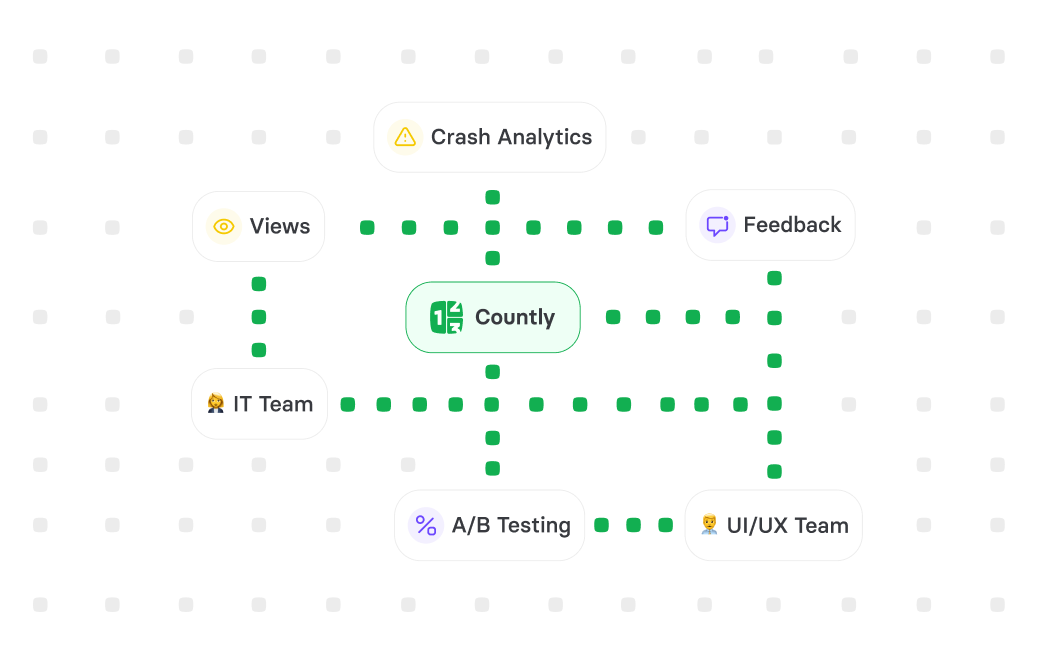
Customer journey analytics works best when the building blocks live in one place on connected, first-party data — which is exactly how Countly is built. Funnels, path analysis, cohorts, retention, and unified user profiles all draw from the same source, so you can follow a real population from first touch through long-term retention without stitching tools together.
Countly's Journeys feature extends this from measurement into action: once you can see where users stall, you can orchestrate the right in-context message or guide at that stage, in the same platform. And because the data stays in infrastructure you control — including on-premise — journey analysis on sensitive user data never requires handing it to a third party.
Frequently asked questions
What is customer journey analytics?The practice of measuring how users actually move through every stage of their relationship with a product, across all touchpoints and over time, to understand and improve the experience. It uses real behavioral data rather than assumptions.
What's the difference between a customer journey map and customer journey analytics?A journey map is a strategic diagram of the stages and friction points you believe customers experience — a hypothesis. Journey analytics is the behavioral data that measures the path users actually take, confirming or correcting the map.
How do you measure the customer journey?Define your journey stages as milestone events, instrument them with clean tracking, build a macro funnel across them, use path analysis to investigate drop-offs, segment by cohort and source, and connect journey completion back to retention.
What tools do you need for customer journey analytics?The core building blocks are funnels, path/flow analysis, cohorts, retention reports, and unified user profiles — ideally working on one connected dataset so you can move between the macro view and individual behavior without exporting data.
Why do customers drop off during the journey?Often the friction is between stages rather than within a single step — for example, a long gap between sign-up and first meaningful action. Path analysis and cohort comparison reveal where momentum stalls so you can address it.
Posts that our readers love
to grow your product
is here.